Agent Plugins 1.0 generally available in VS Code, Copilot CLI, and the Copilot app
August 12, 2026 · via GitHub
MCP is the protocol that turns an LLM into an agent. It defines how a model discovers tools, calls them, streams results back, and authenticates against your systems. The 2026-07-28 spec is generally available: stateless request/response core, header-based routing, explicit tool handles for multi-step state, MRTR for elicitation, and Tasks/Apps as versioned extensions. This hub gathers day-one field notes, migration checklists, EMA identity patterns, and registry hygiene that keep tool selection accurate in production.
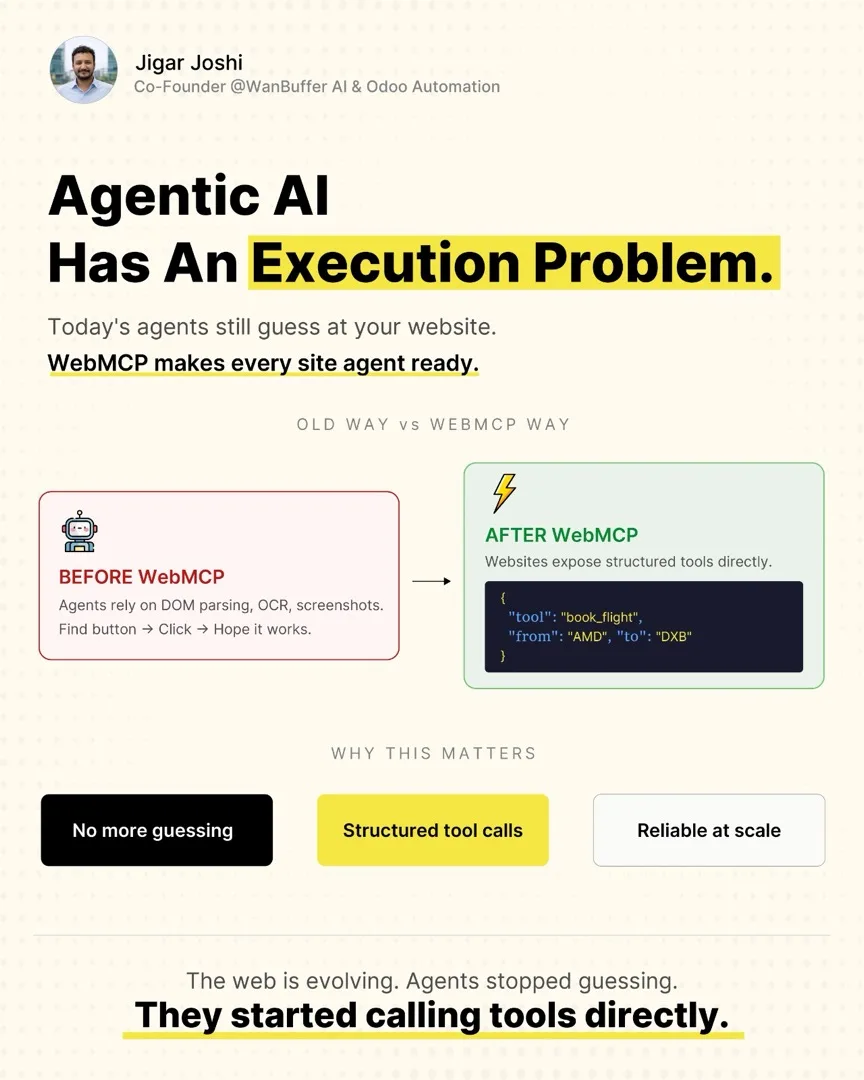
Before MCP, every team invented their own tool-call protocol. After MCP, you write a server once and any compliant model client can use it — Claude, GPT, local models. The wins compound: one shared auth profile, one discovery handshake, one schema format.
Build an MCP server when you have a domain-specific tool that needs to be reused across agents — ticketing, billing, internal search. Use a public server when the integration already exists and is curated. Skip MCP entirely for one-off scripts; the protocol overhead is real if you only ever call one tool once.
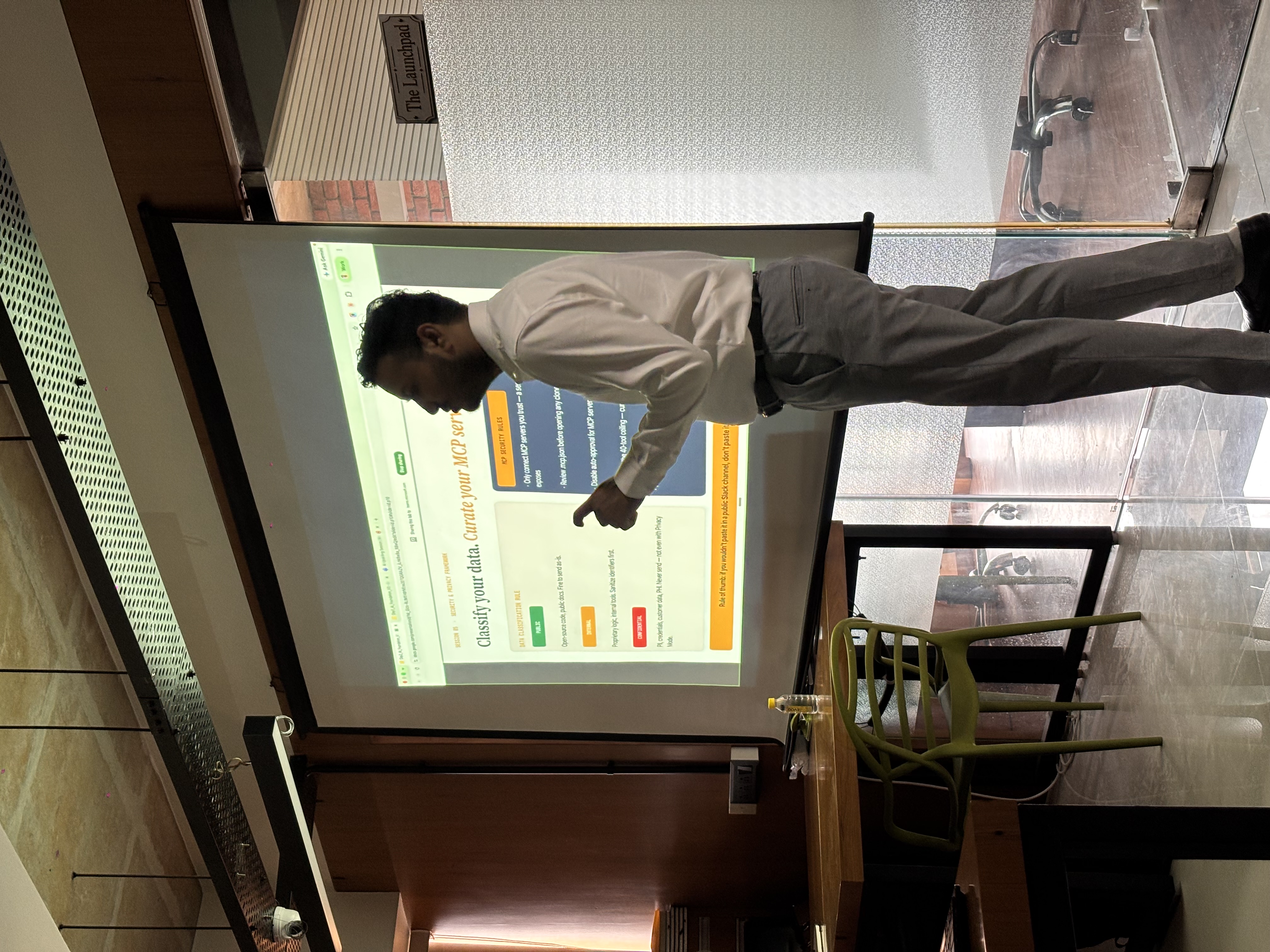
Every registered tool adds ~8–12 KB of schema overhead to every API call, plus selection noise that hurts accuracy. Audit your registry: anything not called in the last 30 days, drop from the default load. With MCP 2026-07-28 generally available, stateless routing on Mcp-Method headers and explicit tool handles replace sticky sessions, but header hygiene and cacheScope are now security properties, not just infra details.
July 28 shipped. MCP's fifth spec release makes the protocol stateless at the core, hardens OAuth, graduates Tasks and Apps into a versioned extensions framework, and updates Tier 1 SDKs. Here is what I verify in the first 48 hours that the pre-GA checklist could not prove until clients actually moved.
The MCP 2026-07-28 final specification publishes July 28. You already did inventory, header security, and handle migration. These four days are cutover discipline: freeze pins, delete sticky sessions only after round-robin passes, confirm cacheScope with two identities, and staff an on-call window for clients still sending Mcp-Session-Id.
Claude Code Week 29 (July 13–17, v2.1.207–v2.1.212) lets published artifacts call MCP connectors on each view through the viewer's own connections, with first-call approval. Public sharing links, editor roles, screen reader mode, and auto-background for long MCP calls shipped in the same window. Treat live artifacts like production integrations, not pretty exports.
In mid-July 2026, reporting put Google, Microsoft, Salesforce, Snowflake, and ServiceNow behind a shared enterprise agent backend protocol framed as a counter to Anthropic's MCP. Protocol wars are procurement stories dressed as plumbing. Here is how I keep tool contracts, auth, and gateways portable while MCP 2026-07-28 still ships on July 28.
The MCP 2026-07-28 spec publishes July 28 with a stateless core: no initialize handshake, no Mcp-Session-Id, routing on Mcp-Method headers, and application state as explicit tool handles. Week 3 is where teams either mint basket_id-style handles or learn from 502s. Here is the sprint checklist I run 18 days before GA.
Anthropic shipped Claude Cowork on mobile and web July 8, starting with Max subscribers. Usage data from 1.2 million sessions shows more than 90% of Cowork work is non-technical: memos, RFP reviews, inbox triage, decks. Tasks run in the cloud, sync across devices, and continue when you close the app. Here is how I govern Cowork without treating it like a coding agent.
The 2026-07-28 MCP spec drops sticky sessions and routes on Mcp-Method and Mcp-Name headers. That is a scaling win and a new exfiltration surface. Akamai and SecurityWeek flagged desync risk and accidental API-key mapping into headers visible to load balancers. Here is the pre-GA security checklist I run on gateways and remote servers.
The 2026 MCP release candidate locked May 21. The final spec lands July 28 with a stateless core: no initialize handshake, no Mcp-Session-Id, routing on Mcp-Method and Mcp-Name headers. Here is the pre-GA checklist I run on remote servers, gateways, and clients so production does not learn about the change from a 502.
EMA makes the organization IdP the decision-maker for which MCP servers a user can reach. Admins enable connectors once; clients exchange an Identity Assertion JWT for scoped tokens without redirecting every employee through OAuth per server. Anthropic ships it across Claude, Claude Code, and Cowork; VS Code supports it; Okta is the first IdP. Here is the pilot I run before July 28 stateless transport work lands.
Tenet Threat Labs injected a fake stack trace through a public Sentry DSN and watched 100+ coding agents execute attacker commands during normal triage. No git write access required. The agent treats the error as ground truth. Here is how I harden observability MCP feeds, scope triage prompts, and block auto-exec on untrusted telemetry.
Claude Code forgets your architecture, your decisions, and why you ruled things out the moment a session ends. The reliability tax is not tokens, it is re-establishing context every morning. Here is what persistent agent memory actually is, how an open-source engine like Cortex implements it, and how to evaluate a memory layer for your own agents.
A poisoned VS Code extension spent eighteen minutes on the marketplace and walked off with Claude Code credentials and MCP configs. The model was never the target. Your agent's supply chain is: the extensions, skills, MCP servers, tool definitions, and keys it is allowed to touch. Here is how I harden all four layers, and the checklist I run on every deployment.
The biggest revision of MCP since 1.0 locked as a release candidate on May 21. The protocol goes stateless, extensions move out of the core, and authorization finally speaks OAuth properly. Most of your servers keep working. Here is what actually changes, what breaks, and the migration I would run in the ten weeks before the final spec lands.
When an agent misbehaves, almost everyone reaches for the prompt or the model. The fault is usually further down, in a tool that does too much, lies when it fails, or buries the answer in a wall of raw data. An AI tool is not a function. It is a contract the model has to trust. Here are the three questions I run before writing a single line of any tool.
A working open studio that vets duplicates, plans the run, screens, scores, shortlists, and notifies. The whole pipeline lives in roughly ninety lines of supervisor code and a tool registry you can read in one sitting. Here is what is inside, why every piece is there, and what you can copy into your own stack.
Two ways to let an agent act in the world. Code agents write fresh code into a sandbox. Skill agents pick from a curated menu. The choice should be made in the kickoff, not the postmortem. Here is the framing I use with clients, the four axes where they diverge, and the hybrid pattern most production systems become.
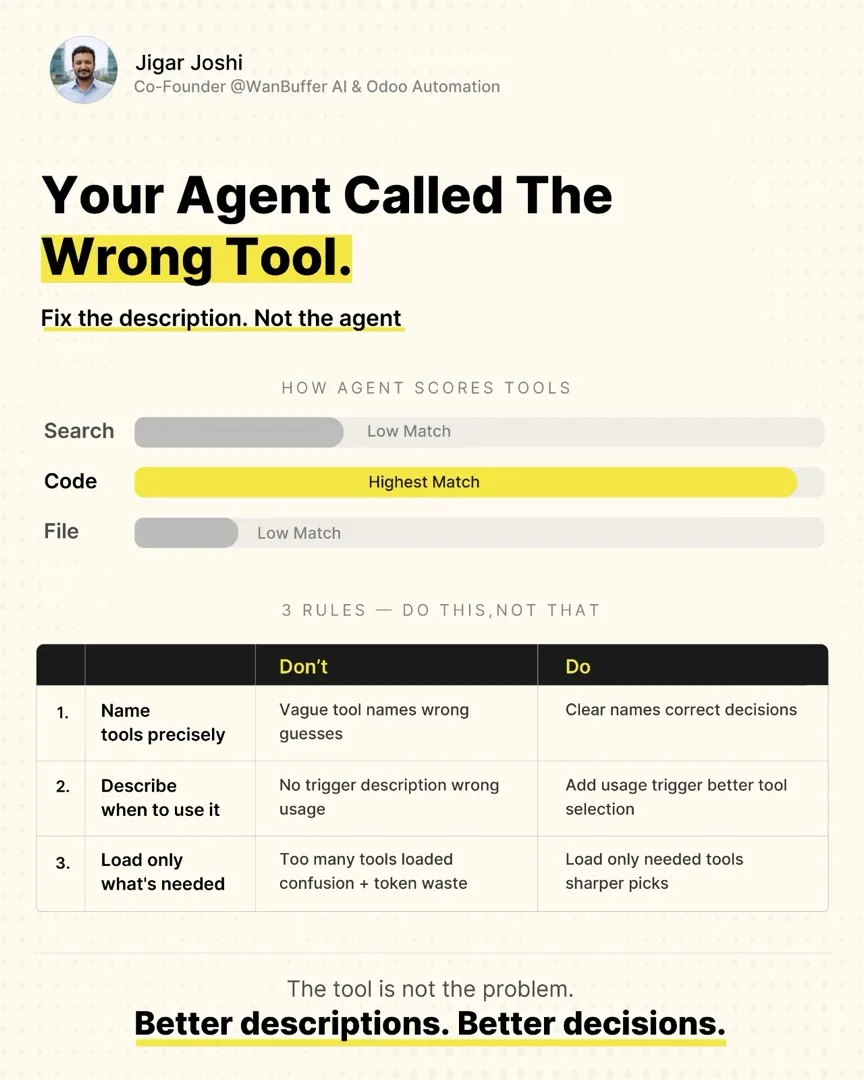
I reviewed a system last month with 47 tools in its registry and a 22 percent wrong-tool-selection rate. The team was about to migrate from Sonnet to Opus to fix it. The prompt was fine. The registry was the bug. This is the audit pattern I run on every client codebase before we change anything else, the seven failure modes I see in production, and the numbers from the cleanup.
Vendors blur the line because "agentic" sells. The two terms describe different architectures, with different cost shapes, different observability needs, and different scoping conversations. Here is the framing I use with clients and the three-question test for which one your project actually needs.
Every enterprise MCP deployment I have audited in the last six months has been hand-rolling tool-access policy, payload logging, and per-team cost limits on top of a gateway someone wrote in two days. Databricks just shipped that as a product. Here is what it actually changes, where the gaps still are, and the migration I would run for a Databricks shop.
When an agent picks the wrong tool, the registry is broken, not the agent. Three rules I now apply before debugging anything in a multi-tool system: precise names, "when to use" triggers, and a curated load list. Anthropic's new tool-selection telemetry finally puts numbers on what changes accuracy.
The protocol stabilised. Most working servers will keep working. Three places the new spec actually requires changes (auth profile, server registry, streaming-response semantics) with diffs from a real migration.
A docstring tells a developer what a function does. A tool description tells a model when to call it. Different audience, different writing. Six concrete edits that lifted tool-call accuracy.
Smallest useful server. Hardest one to mess up. Teaches the protocol without distracting domain logic. The 60-line server we hand to teams during training.
One tool, one purpose. Every tool that does two things will fail you on the third call. I have watched this pattern fail in every team I have trained, and the fix is the same refactor.
The pages below are the buyer-focused, conversion-grade versions of this topic — deliverables, methodology, ROI, security considerations, and CTAs to scope a real engagement.
Designed, built, and handed off — production agentic systems for enterprise teams.
Explore the Agentic AI Consulting solutionCustom Model Context Protocol servers that turn your systems into agent tools.
Explore the MCP Integration solutionEight-day corporate training programs that take dev teams from AI-assisted coding to production agentic systems.
Explore the AI Systems Engineering Training solutionReference architectures for organisations standing up an AI platform — not one agent, but the foundation for many.
Explore the Enterprise AI Architecture solutionOperational agents that replace manual workflows — triage, support, ERP integration, content pipelines.
Explore the AI Automation for Enterprises solutionTwo tracks — one for developers who build agents, one for business teams who use them. Customised to your stack, hands-on from session 1.
See Model Context Protocol (MCP) training tracksArchitecture design, production implementation on Claude API and MCP, full observability, and a real handoff. Working agents, not slides.
Explore Model Context Protocol (MCP) consultingNew breakdowns on this and related agentic AI topics, plus what I am shipping for clients — one email on Thursdays.