Grok 4.6 ships for long-running agents: $2/$6, live in Cursor and Grok Build, matches Sol on AA Intelligence Index
August 12, 2026 · via xAI
One agent works. Two agents talk. Five agents argue forever unless the orchestration is right. Multi-agent systems are not "more agents" — they are an architecture decision about who decides what, when, and with what budget. The orchestration pattern matters more than the model choice.
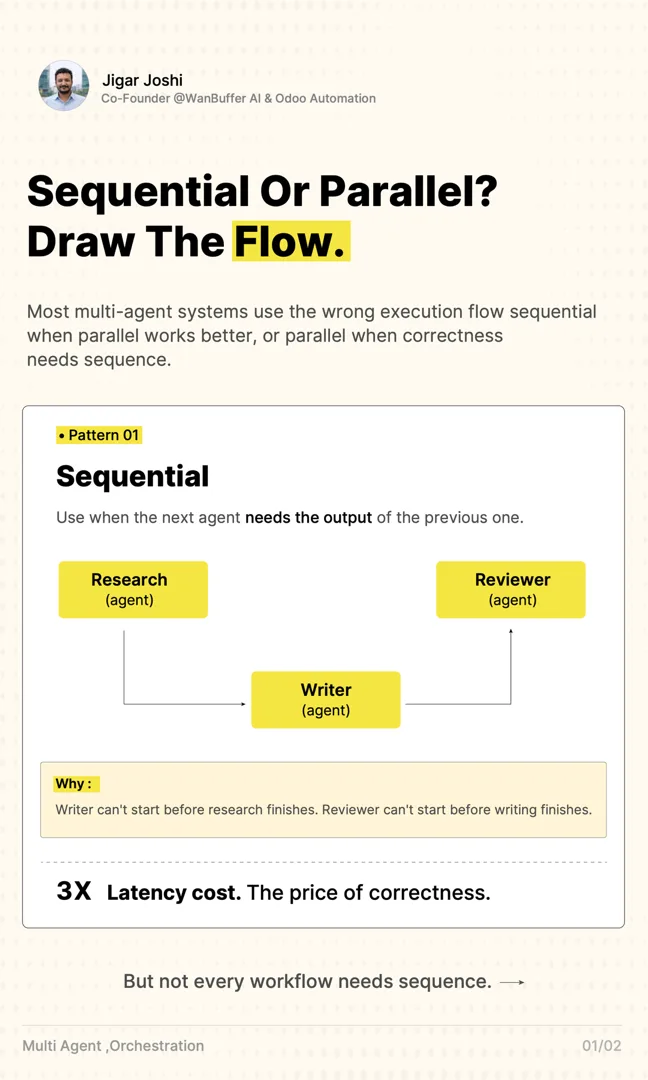
Supervisor pattern: one orchestrator delegates to specialists and integrates their answers. Clean on paper, slow in production when the supervisor becomes a bottleneck. Handoffs: agents pass the baton with the current context. Messier in code, recovers better when one agent loses the plot. Most teams that start with supervisor end up on handoffs for the recovery story.
Swarms shine when sub-goals are genuinely parallelisable and the work is exploratory — research, broad search, multi-source synthesis. Skip swarms for sequential workflows; the coordination overhead destroys the parallel-win on anything that has to happen in order.
Modern agent runtimes can fan out to sub-agents for independent reads, then serialise on the write turn. This cuts a 20-minute refactor to under 4. The orchestration pattern matches the supervisor / swarm split — supervisor for the plan, swarm for the read phase, supervisor again for the write.
Cursor's July 2026 swarm write-up rebuilt SQLite in Rust from the docs and measured planner vs worker spend. Frontier-only GPT-5.5 hit about $10.5k; Opus 4.8 planning with Composer 2.5 workers landed near $1.3k at similar quality. Here is how I translate that into routing rules for production graphs.
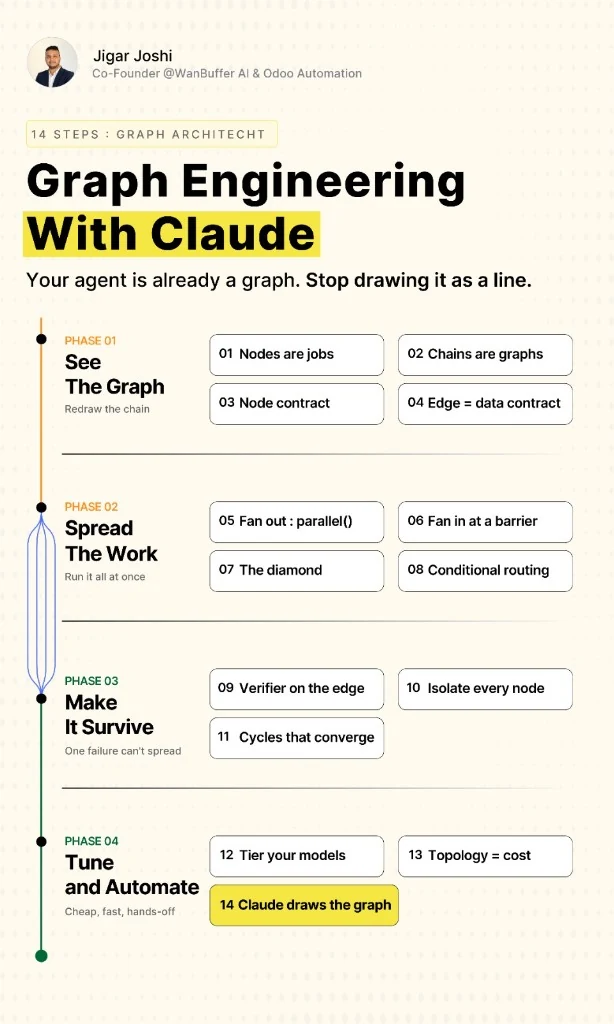
A straight-line agent is a degenerate graph. Claude Code dynamic workflows move orchestration into JavaScript so subagents fan out, verify, and converge without stuffing every intermediate result into one context window. Here is the 14-step roadmap I map onto production work, with topology diagrams, contracts, and the patterns I already ship.
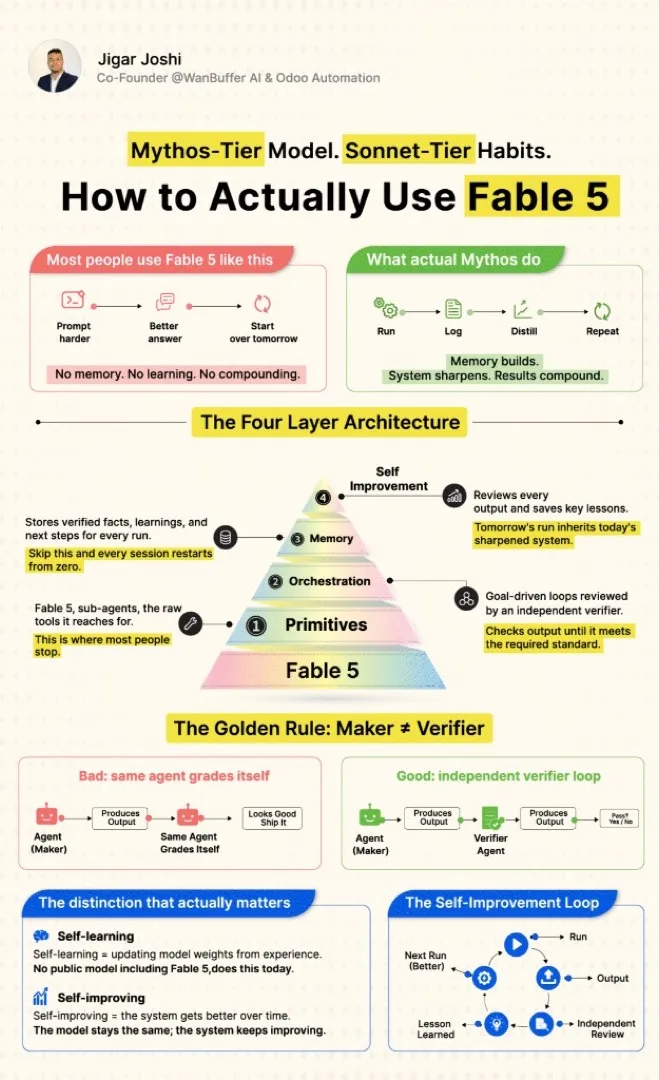
Most teams prompt harder, get a better answer, and start over tomorrow. That is not compounding. Self-learning updates model weights from experience; no public model including Fable 5 does that today. Self-improving means the system gets better: run, log, distill, repeat. The golden rule is maker ≠ verifier. Here is the four-layer architecture and loop patterns I ship.
Fable 5 is back globally, but most teams use it like a bigger Sonnet: prompt harder, better answer, start over tomorrow. Mythos-tier models need Mythos-tier systems: primitives, orchestration, memory, and self-improvement. The golden rule is maker ≠ verifier. Here is the architecture I draw on every engagement after the July 7 billing cliff.
Codex app 26.616 adds Record and Replay on macOS: perform a workflow once, Codex packages it into a skill you replay with different inputs. Thread handoff and automation run history ship alongside. Computer Use must be enabled. Here is the review checklist I run before any recorded skill runs unattended.
Google Research shipped Agentic RAG on Gemini Enterprise with a Sufficient Context Agent that refuses to answer when retrieval is incomplete. On factuality benchmarks they report up to 34% higher accuracy versus standard RAG. Here is when one-shot RAG is still enough, when you need iterative retrieval, and how I wire the pattern without blowing latency budgets.
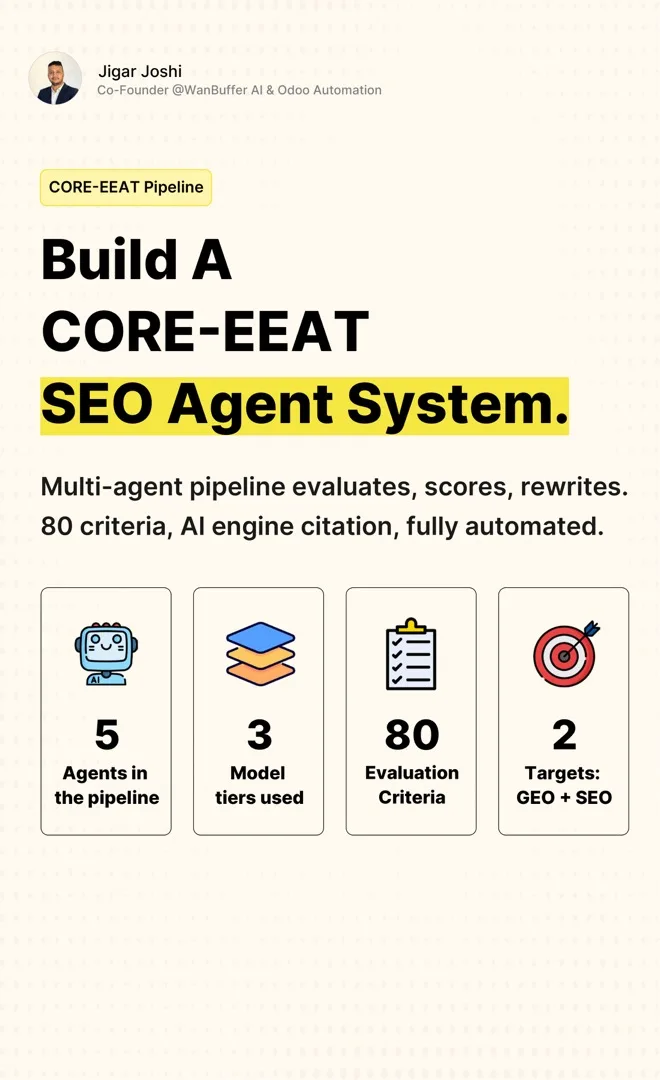
A working open studio that vets duplicates, plans the run, screens, scores, shortlists, and notifies. The whole pipeline lives in roughly ninety lines of supervisor code and a tool registry you can read in one sitting. Here is what is inside, why every piece is there, and what you can copy into your own stack.
Vendors blur the line because "agentic" sells. The two terms describe different architectures, with different cost shapes, different observability needs, and different scoping conversations. Here is the framing I use with clients and the three-question test for which one your project actually needs.
Supervisors looked clean on paper and shipped slow in production. Handoffs read messier in the code but recover better when an agent loses the plot. Two real systems and where supervisors still earn their keep.
Self-correction loops without budgets, single-agent solutions to multi-domain problems, and using JSON mode to force structure I should have built into the schema. An honest review.
Replacing Sonnet with Haiku in the dispatcher role cut our orchestration cost dramatically. It also cost us in two specific places I did not predict.
The pages below are the buyer-focused, conversion-grade versions of this topic — deliverables, methodology, ROI, security considerations, and CTAs to scope a real engagement.
Designed, built, and handed off — production agentic systems for enterprise teams.
Explore the Agentic AI Consulting solutionEight-day corporate training programs that take dev teams from AI-assisted coding to production agentic systems.
Explore the AI Systems Engineering Training solutionReference architectures for organisations standing up an AI platform — not one agent, but the foundation for many.
Explore the Enterprise AI Architecture solutionTracing, eval, cache-hit telemetry, and cost attribution for production agents.
Explore the AI Observability solutionSupervisor + handoff orchestration for portfolios of agents that need to cooperate without arguing.
Explore the Multi-Agent Workflows solutionTwo tracks — one for developers who build agents, one for business teams who use them. Customised to your stack, hands-on from session 1.
See Multi-Agent Systems training tracksArchitecture design, production implementation on Claude API and MCP, full observability, and a real handoff. Working agents, not slides.
Explore Multi-Agent Systems consultingNew breakdowns on this and related agentic AI topics, plus what I am shipping for clients — one email on Thursdays.